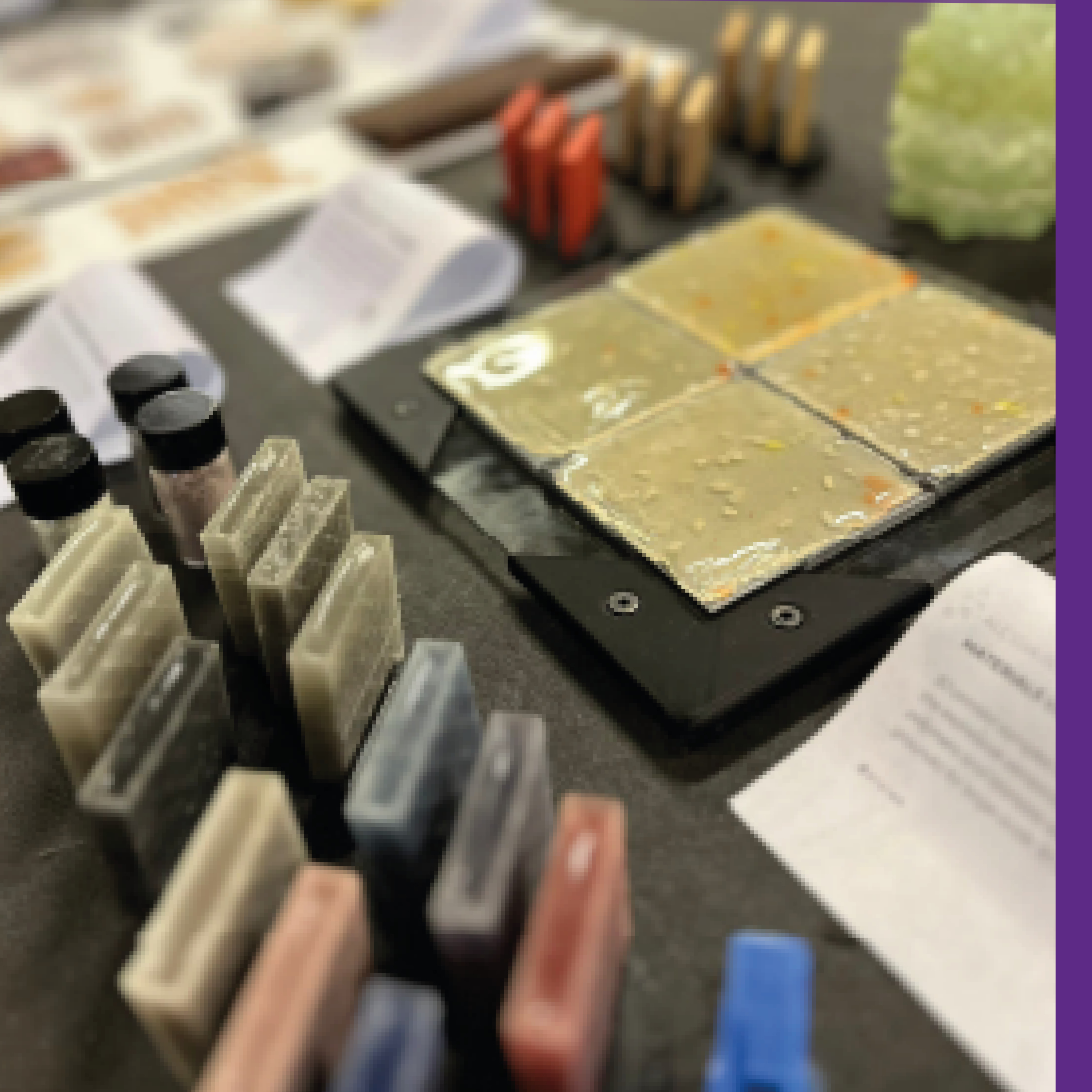
Banner image placeholder
Banner image

Circularity by Design, Materials, and Additive Manufacturing


Fostering sustainable and circular materialities enabled by additive manufacturing
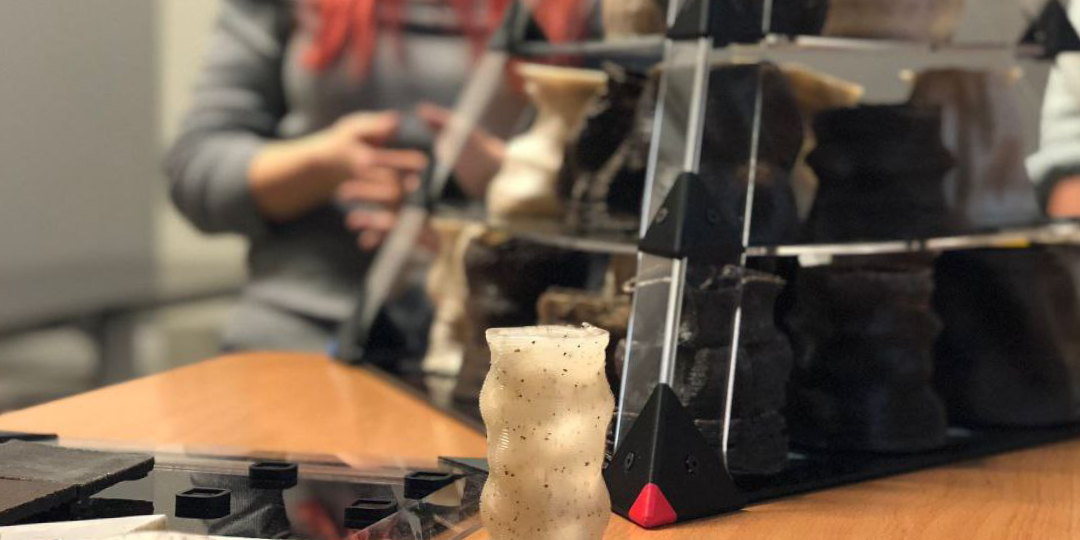


Alt text

Circularity by Design, Materials, and Additive Manufacturing

Fostering sustainable and circular materialities enabled by additive manufacturing

PhD research


  • 📅 · Period:
    November 2020 – March 2024
  • 💰 · Collaboration:
    FAST Lab, Western University, Canada (visiting research, September 2022 – March 2023)

  • 🏛 · Main facility:
    Politecnico di Milano, Italy

  • 🤝 · Lab collaboration:
    FAST Lab (visiting research)

  • ⭐ · My Role:
    PhD Candidate

  • 🏫 · My Affiliation:
    PhD Candidate and research fellow, Department of Chemistry, Materials and Chemical Engineering "Giulio Natta", Politecnico di Milano (Italy) PhD Candidate, Design Department, Politecnico di Milano (Italy)

  • 🏷️ · Keywords:
    circular economy, additive manufacturing, materials library, materials for design, materials design, engineering design, open design, materials engineering


Overview

Circular materials and design strategies can support the development of sustainable products, but their use in real, practical contexts is still limited. Designers, engineers, and practitioners are not always aware of the possibilities offered by these materials, and their experiential and sensorial qualities are rarely considered in the conventional materials development process. New production and consumption patterns based on additive manufacturing are meanwhile emerging from local communities and distributed networks. The Circularity by Design, Materials, and Additive Manufacturing project aims at investigating new circular materials and design strategies for additive manufacturing, and at fostering their use in real contexts. The research is based on two main case studies, each linked to a specific secondary raw material stream: FiberEUse, dealing with recycled glass and carbon fiber-reinforced polymers for small-format 3D printers, and RepMat Library (Replicating Materials Library), dealing with recycled thermoplastics and biomass-derived by-products for large-format 3D printers — see the dedicated project page for details. The experimental work involved materials characterization from both an engineering and design perspective, and led to new circular materials, adapted 3D printing systems, and product applications in the furniture, automotive, and sport sectors. The project developed the Materials Library System, a replicable, open-source experiential tool combining a physical and a virtual component. Its first implementation was the FiberEUse Materials Library, developed within the FiberEUse case study; the system was then generalized and released as open-source through the RepMat Library. 1


Supervisors

Supervisor: Marinella Levi.

Co-supervisor: Valentina Rognoli.

💡

My contribution:

  • State-of-the-art review: Conducted a systematic literature review at the intersection of digital fabrication technologies, circular materials, and real-world product applications, covering academic research, industrial developments, and design practice. Conducted a further review on experiential learning tools for materials design, such as material libraries and databases.
  • Materials: Experimental work on recycled glass and carbon fiber-reinforced polymers (FiberEUse case study) and recycled thermoplastics and biomass by-products (RepMat case study), including materials characterization from both an engineering and design perspective, physical-technical properties and expressive-sensorial qualities.
  • Additive manufacturing: Process optimization of small-format UV-assisted Direct Ink Writing (DIW) and large-format 3D printing systems for circular material feedstocks, including modification/redesign of open hardware.
  • Product design: Development of product concepts and applications for circular design and upcycling through 3D printing and ciruclar materials. Development of the Materials Library System, leading to the creation of two libraries, i.e., the FiberEUse library and the RepMat library (Replicating Materials Library), an open-source replicable materials library for circular materials.
  • Dissemination: Publications, conference presentations, project exhibitions, academic webinars, participation in community outreach events and design exhibitions, and MOOC lectures.


Research and dissemination output connected to my work

  • 📚 Publications: 1 PhD Thesis, 14 Journal articles, 3 Book chapters, 4 Conference papers, 1 Poster abstract
  • ⚙️ Technology Transfer: 4 on OSF, 4 on Zenodo.

  • 🎤 Presentations: Work presented at academic conferences, webinars and workshop presentations, and industrial events, such as EKSIG 2023 (2023) or Open Hardware Summit 2025 (2025).
  • 📢 Dissemination & outreach: Work presented at project exhibitions, such as Design4Materials 2024 and DesignXDesigners 2024, and featured in academic webinars, news press, and a MOOC (Massive Open Online Course).


Selected dissemination and media outreach

Alt text

DesignXDesigners 2023


PhD research exhibition with MaDe Trans group at DesignXDesigners 2023, Milan Design Week 2023 (Apr 17 - May 17, 2023)

Alt text

3D printing for sustainable and circular future

PhD research work exhibited with +LAB at Wired Next Fest 2024, Castello Sforzesco, Milan (Jun 15, 2024)

Installation of FiberEUse at Milan Design Week 2021

Video at Milan Design Week 2021


Materials from waste and additive manufacturing for the circular economy

Video from the T4C Webinar (EU project Tracks4Crafts, 2024)


Milan Design Week 2024 #ShapedbyDesign - Design Periferico

Video from the exhibition "Design Periferico" with samples from my PhD research (Spazio Bengasi, Milan Design Week 2024)


Publications from the project

Journal articles

Book chapters

Conference papers

Poster abstracts

Technology transfer from the project

Tools

Technology transfer repositories

Other outputs from the project

MOOCs (Massive Open Online Courses)

  • Materials from waste and 3D printing (2025) Two lectures in the MOOC "Materials design for transitions: toward regenerative ecologies", part of the POK series (Polimi Open Knowledge), Politecnico di Milano. Available at: https://www.pok.polimi.it/course/view.php?id=170#tab2
Translate to